When looking at the coverage NPR has done on Pakistan since 2001, it is difficult to break through the vast amount of stories and information. Over the past few months, NPR has reported heavily on Pakistan. This past week, Senior U.S. and Pakistani officials met to discuss foreign relations. NPR’s coverage was aimed largely at two things; timely reports on how the talks were going, and the effects these talks would have in determining the US relationship with Pakistan. The most recent story, “U.S., Pakistan Seek To Build Trust With Talks” on Morning Edition touched on both of these issues. What is notable is the amount of information NPR provided, with at least a story each day that touched on Pakistan.
If NPR is reflecting the news media, it seems that there is a huge focus on Pakistan. Looking back on the November Presidential election, it seems that Pakistan was not close to being as much on the news radar as it is today. One story I found very by Talk of the Nation entitled, “Obama Promises ‘New Dawn’ of World Leadership” is an extremely interesting approach to covering Pakistan. In this segment, experts and host Neal Conan, had international listeners call in and answer, “What role do you want the U.S. to play in international issues?” In this hour-long session, there is a discussion about Afghanistan and Iraq but no mention of Pakistan.
This brings me to my first question: Do you think that with middle-eastern conflict, do you think the news media reacts in a timely and efficient manner to get the public interested?
The stories that did emerge from NPR during Obama’s election were largely centered on whether Obama would “succeed” with international relations. Some articles are entitled, “Status Report” Obama and the Middle East”, “Examining Obama’s Plans for Afghanistan”, “What To Expect From Obama’s Afghanistan Address”. These stories show a news media that is attempting to use Obama as a face for the US, rather than asking, for example, what is the military doing with Pakistan? NPR picked up coverage of Pakistan following Obama's plan to send more troops to Afghanistan.
My following questions stem from this as well:
Do you think that the news media looks too often to official sources to receive information regarding Pakistan?
Do you think the American public has had ample opportunity and information to fully understand the Middle Eastern conflict? How can reporters work to create a more informed public?
Tuesday, March 30, 2010

Wednesday, March 24, 2010
NPR's coverage of the wars in Iraq and Afghanistan
**I would like to preface my examination of NPR's coverage of Iraq and Afghanistan wars with a comment about the NPR website. While NPR is traditionally a radio show, I feel that they have very seamlessly entered the web atmosphere, creating an extremely effective and user-friendly website. When I started researching stories about the wars, I was able to go directly to "Iraq" and "Afghanistan" pages that compile recent stories heard on air, news articles from the Associated Press and NPR, a search engine to navigate the page, authors interviews and a link to blogs about the topic. My favorite aspect was the link that created a pre-assembled list of NPR stories heard on air pertaining to that particular topic. All-in-all, when viewing NPR's website, it is hard to tell if radio innately has the qualities to be integrated into the web or if NPR just figured it out on their own.**
When searching "iraq war" in recent All Things Considered heard-on-air stories, the results show an interesting mix of stories. Starting at March 1, 2010, one of NPR's and the nations most largely tuned in news outlets has reported on aspects of the Iraq war ranging from "Is the Bible more violent than the Quran", stories about The Hurt Locker, an article reporting on the video released by Anwar al-Alwaki that was broadcasted recently on CNN, and a interview with former U.N. Ambassador to Iraq. In total, All Things Considered has mentioned the Iraq war in roughly 10 stories this month.
NPR has one section on their website featuring a special series that Weekend Edition did called, "Weekend Edition Explores The Impact of War". This section is dedicated to exploring the impact of war on American families and service members. This series aired November 7, 2009 and remained throughout the month.
However, it seems that despite these pages that contain really interesting features, radio is having trouble translating the constant updates into the web-world of radio. When you look at CNN.com or CNN broadcast, the update bar informs you of things that are going on in Iraq and Afghanistan. While watching the health care debate two days ago, it was hard not to think about all the other issues going on abroad as headlines such as, "four killed in suicide bombing in Iraq" scrolled beneath. While one can subscribe to the update feature of NPR's website, it seems to lack the immediacy of the infamous reports we heard from Murrow during WWII. Rather than putting you in the war, NPR does not seem to be focusing on letting you hear the air raids, but rather see how the effects and consequences of war permeate into our culture.
I do not mean to bash NPR's coverage. There certainly are updates, just the feature stories that really utilize the format of radio, don't seem to have the immediacy of the infamous Murrow broadcast during the London air raids or even the recent story we heard in class from the reporter in Haiti who saw the young boy who was severely injured.
NPR also has the advantage of being able to produce longer stories on programs such as Talk of the Nation. Talk of the Nation recently did a story entitled, "Seven Year In, Assessing the Value of the Iraq War". This story was a long debate on March 23, 2010 that was between David Corn of Mother Jones and Michael Rubin of the American Enterprise Institute. The story provided context and showed polarized views regarding the role of the U.S. in war. I was very happy to see that NPR was doing a feature on why we have been in the war so long, the progress that has or has not been made, and the effect war has had on both our country and Iraq. The story also showed how radio, and interviews, can raise questions that flirt with the lines of objectivity. At one point, Mr. Rubin said:
"You're assuming a maliciousness and a desire to lie. What we have under the Clinton administration and under the Bush administration was a Central Intelligence Agency which by and large was getting it wrong.
When searching "iraq war" in recent All Things Considered heard-on-air stories, the results show an interesting mix of stories. Starting at March 1, 2010, one of NPR's and the nations most largely tuned in news outlets has reported on aspects of the Iraq war ranging from "Is the Bible more violent than the Quran", stories about The Hurt Locker, an article reporting on the video released by Anwar al-Alwaki that was broadcasted recently on CNN, and a interview with former U.N. Ambassador to Iraq. In total, All Things Considered has mentioned the Iraq war in roughly 10 stories this month.
NPR has one section on their website featuring a special series that Weekend Edition did called, "Weekend Edition Explores The Impact of War". This section is dedicated to exploring the impact of war on American families and service members. This series aired November 7, 2009 and remained throughout the month.
However, it seems that despite these pages that contain really interesting features, radio is having trouble translating the constant updates into the web-world of radio. When you look at CNN.com or CNN broadcast, the update bar informs you of things that are going on in Iraq and Afghanistan. While watching the health care debate two days ago, it was hard not to think about all the other issues going on abroad as headlines such as, "four killed in suicide bombing in Iraq" scrolled beneath. While one can subscribe to the update feature of NPR's website, it seems to lack the immediacy of the infamous reports we heard from Murrow during WWII. Rather than putting you in the war, NPR does not seem to be focusing on letting you hear the air raids, but rather see how the effects and consequences of war permeate into our culture.
I do not mean to bash NPR's coverage. There certainly are updates, just the feature stories that really utilize the format of radio, don't seem to have the immediacy of the infamous Murrow broadcast during the London air raids or even the recent story we heard in class from the reporter in Haiti who saw the young boy who was severely injured.
NPR also has the advantage of being able to produce longer stories on programs such as Talk of the Nation. Talk of the Nation recently did a story entitled, "Seven Year In, Assessing the Value of the Iraq War". This story was a long debate on March 23, 2010 that was between David Corn of Mother Jones and Michael Rubin of the American Enterprise Institute. The story provided context and showed polarized views regarding the role of the U.S. in war. I was very happy to see that NPR was doing a feature on why we have been in the war so long, the progress that has or has not been made, and the effect war has had on both our country and Iraq. The story also showed how radio, and interviews, can raise questions that flirt with the lines of objectivity. At one point, Mr. Rubin said:
"You're assuming a maliciousness and a desire to lie. What we have under the Clinton administration and under the Bush administration was a Central Intelligence Agency which by and large was getting it wrong.
"We know that from a number of reasons, and yet we budget them $40 billion, and we haven't really had a serious investigation into what went wrong.
"I'm not going to get into all the conspiracy theories about the Office of Special Plans and nought(ph). It isn't I mean, historians will debate this once the documents fully become clear, but ultimately we had a few decisions.
"One was the decision to go to war. The second was the decision to aim for a democracy, and the third was, frankly, the complete lack of plans and consensus as to whether we would have an occupation and then how that occupation would proceed".
This story showed NPR raising some important and heavy questions about the continued U.S. involvement in Iraq, a story that I found effective and important for the American public.
As I continue to examine NPR's coverage of the Iraq and Afghanistan war, I want to look at how the medium is effectively utilized and what shows/programs are featuring stories, like Murrow's, on the war. My personal advice would be updates followed by interviews with people affected on various levels, be it a policy maker, a veteran, a historian, ecc.
This story showed NPR raising some important and heavy questions about the continued U.S. involvement in Iraq, a story that I found effective and important for the American public.
As I continue to examine NPR's coverage of the Iraq and Afghanistan war, I want to look at how the medium is effectively utilized and what shows/programs are featuring stories, like Murrow's, on the war. My personal advice would be updates followed by interviews with people affected on various levels, be it a policy maker, a veteran, a historian, ecc.
Tuesday, February 23, 2010
Bursting the Bubble: NPR's role in reporting the financial meltdown
The radio as a medium presents a unique format for journalists to communicate with a broad audience. Radio, unlike many other mediums, is a free, highly accessible way to obtain information. According to data released by NPR regarding radio’s reach among the U.S. population, 99% of Americans have access to at least one NPR station. NPR is a privately supported, non-profit membership organization that is primarily listener supported and receives only 2% of its funding from Federal Government grants. As a result of this unique funding structure, and limited corporate support, NPR has a greater capacity to deliver unbiased, hard-hitting news.
Many of the limitations and benefits of radio originate from the structure of the medium. Additionally, how the audience uses the medium also plays a key role in determining whether or not radio can successfully deliver a piece of information. Individual listeners have the ability to control how actively or passively they process the information sent over the airwaves. Because of this, radio uses an array of creative techniques and structures to make up for the lack of visual images, and keep listeners engaged. With radio, active listeners have the ability to become more engaged because the medium pushes them to create images in their own mind.
In Adam Davidson’s “Giant Pool of Money”, he utilizes sound elements within expert interviews and personal accounts. By examining the human toll, this piece makes the broader story of the economic crisis relevant to the average NPR listener. In the following example, the reporter elevates the significance of his message by capturing a vulnerable moment that conveys how citizens have been impacted by the crisis.
Many of the limitations and benefits of radio originate from the structure of the medium. Additionally, how the audience uses the medium also plays a key role in determining whether or not radio can successfully deliver a piece of information. Individual listeners have the ability to control how actively or passively they process the information sent over the airwaves. Because of this, radio uses an array of creative techniques and structures to make up for the lack of visual images, and keep listeners engaged. With radio, active listeners have the ability to become more engaged because the medium pushes them to create images in their own mind.
In Adam Davidson’s “Giant Pool of Money”, he utilizes sound elements within expert interviews and personal accounts. By examining the human toll, this piece makes the broader story of the economic crisis relevant to the average NPR listener. In the following example, the reporter elevates the significance of his message by capturing a vulnerable moment that conveys how citizens have been impacted by the crisis.
This story is also an excellent example of how contrasting multiple interviews that cover different angles of a story can enrich the listener’s understanding of the types and levels of people who are affected by the financial crisis. Rather than focusing on one individual, like in “Foreclosures Rise with Slowing Housing Market”, the juxtaposition of a top-selling CDO agent versus someone who was given a bad loan allows readers to think about the key players within the financial crisis.
NPR’s success in covering the economic crisis can be seen in Adam Davidson’s reporting on “Planet Money: The Financial Crisis One Year Later”, which effectively communicates the current status of the American economy. Davidson and Renee Montagne discuss the events and components leading up to September 7, 2008. Davidson’s firsthand experience covering the crisis makes his analysis and perspective a year later, all the more relevant. Davidson’s personal account of what happened exposed audiences to an inside perspective on the financial climate. Furthermore, Davidson addresses where the economy is potentially headed. While he stresses the uncertainty of predicting the future in a volatile financial climate, he discusses the potential concerns with the commercial real-estate market. This commercial real-estate issue warrants further investigation, in that this may develop into the next threat to the economy.
After examining their different approaches in covering the economic crisis from its initial stages to its breaking point and afterwards, NPR seems to be a good outlet for the economic crisis. The outlet explores various storytelling structures, utilizing interviews, music, and reporter commentary. NPR also relies heavily on very well informed and expert sources, adding depth to their coverage. The reporters are conscious of their roles as liaisons between these experts and the public as a whole. However, at times it is apparent that NPR caters to a large and broad audience, one that is not as informed on financial coverage and therefore requires more general and less specific information. NPR is also not a financial news outlet, creating shorter stories that provide less space for in-depth coverage.
Monday, February 8, 2010
Hurricane Katrina Presentation
**In the previous post, I linked the slideshow that accompanies research my group and I did about the media's coverage of Hurricane Katrina. Please reference the slides in addition to this post.**
The task of going through media coverage during and after the Hurricane Katrina crisis has been surprising in many ways. The project, to look at coverage as Katrina hit (August 25, 2005- August 31, 2005) and prior (coverage from Sept. 31, 2005 and beyond), allowed me to closely examine the media's influence on our perceptions of Katrina.
My first observation from viewing all this footage and reading numerous articles is how I was not desensitized from the images of Katrina, but just the opposite. Desensitization is the theory that when people are exposed to something to a great extent (often in looked at in regards to violence), the emotional impact of the image is weakened. I was certainly accustomed to images of Katrina prior to this project, but after this project, the weight of what happened, how many people were displaced, how poorly the government responded, the failure of the levees, and the overall tragedy of the situation, seemed all the more real.
I think that by examining reports that extended over a longer period of time and through various mediums, it becomes increasingly apparent why and how we percieve the Katrina catastrophe.
When examining coverage before the crisis, I found that the most effective journalism was that which stressed the urgency, was immediate and up-to-date, and provided useful information to both citizens being directly impacted by the hurricane and also those who needed to understand what was going on from a distance. The NPR report does a nice job relating to a wide audience through a subjective interview of what is happening near New Orleans. NBC's Nightly News coverage chose to present a formulaic, edited and somewhat detached look at the crisis. It showed the community of New Orleans but drew a line between those merely listening in on the coverage from a distance and those who would be impacted by it. The city was described as a "paradise" rather than a community that would be forever impacted and face years and years of trial and tribulation.
Prior to the crisis, the coverage tended to focus on familiar frames of racial disparity, victimization, "chaos", and at some points sensationalized coverage of the disaster. Effective pieces of coverage were those that chose to look at why this happened, how the government was responding, the current state of relief efforts, while trying to emphasis the suffering and awful situation that was going on in New Orleans. When looking at coverage prior, it is apparent how the media was attempting to pull in an audience and convey the chaos that surrounded the tragedy. However, at times the reports lose sight of being informative and their role as productive modes of communication and ultimately political action.
The coverage of Katrina is very hard to look at, even from a distance and years later. The media's role had to walk a thin line in attempting to get people emotionally involved but remaining a source of useful information and a check on government. When looking at the video of Anderson Cooper, you have to ask if his reaction is effective or ineffective?
I hope the project allows viewers to see the scope of the coverage and compare the different frames and approaches to a story that is so complex.
The task of going through media coverage during and after the Hurricane Katrina crisis has been surprising in many ways. The project, to look at coverage as Katrina hit (August 25, 2005- August 31, 2005) and prior (coverage from Sept. 31, 2005 and beyond), allowed me to closely examine the media's influence on our perceptions of Katrina.
My first observation from viewing all this footage and reading numerous articles is how I was not desensitized from the images of Katrina, but just the opposite. Desensitization is the theory that when people are exposed to something to a great extent (often in looked at in regards to violence), the emotional impact of the image is weakened. I was certainly accustomed to images of Katrina prior to this project, but after this project, the weight of what happened, how many people were displaced, how poorly the government responded, the failure of the levees, and the overall tragedy of the situation, seemed all the more real.
I think that by examining reports that extended over a longer period of time and through various mediums, it becomes increasingly apparent why and how we percieve the Katrina catastrophe.
When examining coverage before the crisis, I found that the most effective journalism was that which stressed the urgency, was immediate and up-to-date, and provided useful information to both citizens being directly impacted by the hurricane and also those who needed to understand what was going on from a distance. The NPR report does a nice job relating to a wide audience through a subjective interview of what is happening near New Orleans. NBC's Nightly News coverage chose to present a formulaic, edited and somewhat detached look at the crisis. It showed the community of New Orleans but drew a line between those merely listening in on the coverage from a distance and those who would be impacted by it. The city was described as a "paradise" rather than a community that would be forever impacted and face years and years of trial and tribulation.
Prior to the crisis, the coverage tended to focus on familiar frames of racial disparity, victimization, "chaos", and at some points sensationalized coverage of the disaster. Effective pieces of coverage were those that chose to look at why this happened, how the government was responding, the current state of relief efforts, while trying to emphasis the suffering and awful situation that was going on in New Orleans. When looking at coverage prior, it is apparent how the media was attempting to pull in an audience and convey the chaos that surrounded the tragedy. However, at times the reports lose sight of being informative and their role as productive modes of communication and ultimately political action.
The coverage of Katrina is very hard to look at, even from a distance and years later. The media's role had to walk a thin line in attempting to get people emotionally involved but remaining a source of useful information and a check on government. When looking at the video of Anderson Cooper, you have to ask if his reaction is effective or ineffective?
I hope the project allows viewers to see the scope of the coverage and compare the different frames and approaches to a story that is so complex.
Tuesday, January 26, 2010
A look at Haiti coverage
Since the devastating 7.0 magnitude earthquake hit Haiti, the news media has been constantly providing updates regarding the crisis. Major news outlets have created online pages dedicated to Haiti; with stories ranging from scientific explanations of the geological phenomenon, to profiles of humanitarian efforts, to character stories profiling individuals with a unique relationship to the crisis. With such an immediate and powerful crisis, the news media is trying to leave no rock unturned and approach all relevant angles of the event.
The widespread media coverage of Haiti reflects the levels of importance that the crisis has on local, national, and global levels. Haiti coverage has the nations attention and has effectively been brought into your community, your campus, your living room.
The Washington Post recently produced a photo gallery entitled, "World reacts to Haiti earthquake". This photo essay is a compilation of 82 slides, starting with George Clooney and ending in Taiwan. The images vary in subject and mainly focus on global humanitarianism and personal emotion. The contrast of united community and suffering individuals highlight the scale of the earthquake and how its aftershock is literally all around us.
I focused on this photo slideshow for two reasons. First, I believe it highlights how the press can literally convey the relevance of an event. When viewing the slideshow, you are bound to so many of the images through personal experience. The varied images speak to your personal ideology, morals, experiences, and pulls the global to the personal.
I also chose to highlight this photo slideshow in response to an opinion piece I read in the times about the purpose of crisis photojournalism and its ultimate goal. The article, "Face to Face with Tragedy" was written by Clark Hoyt, the NYTimes public editor.
Hoyt's opinion piece addresses criticism of Haiti's photo coverage. Many people have argued that the photo's being shown in the news media are 'sensationalist' and 'exploitative'. Hoyt cites one reader who wrote on the NYTimes website that, "If this had happened in California, I cannot imagine a similar depiction of half-clothed bodies splayed out for the camera. What are you thinking?”.
Hoyt discusses controversial images of dead babies, strung out corpses, and so forth. The coverage reminds me of a excerpt from Michael Herr's Dispatches in which he writes, " put in quote".
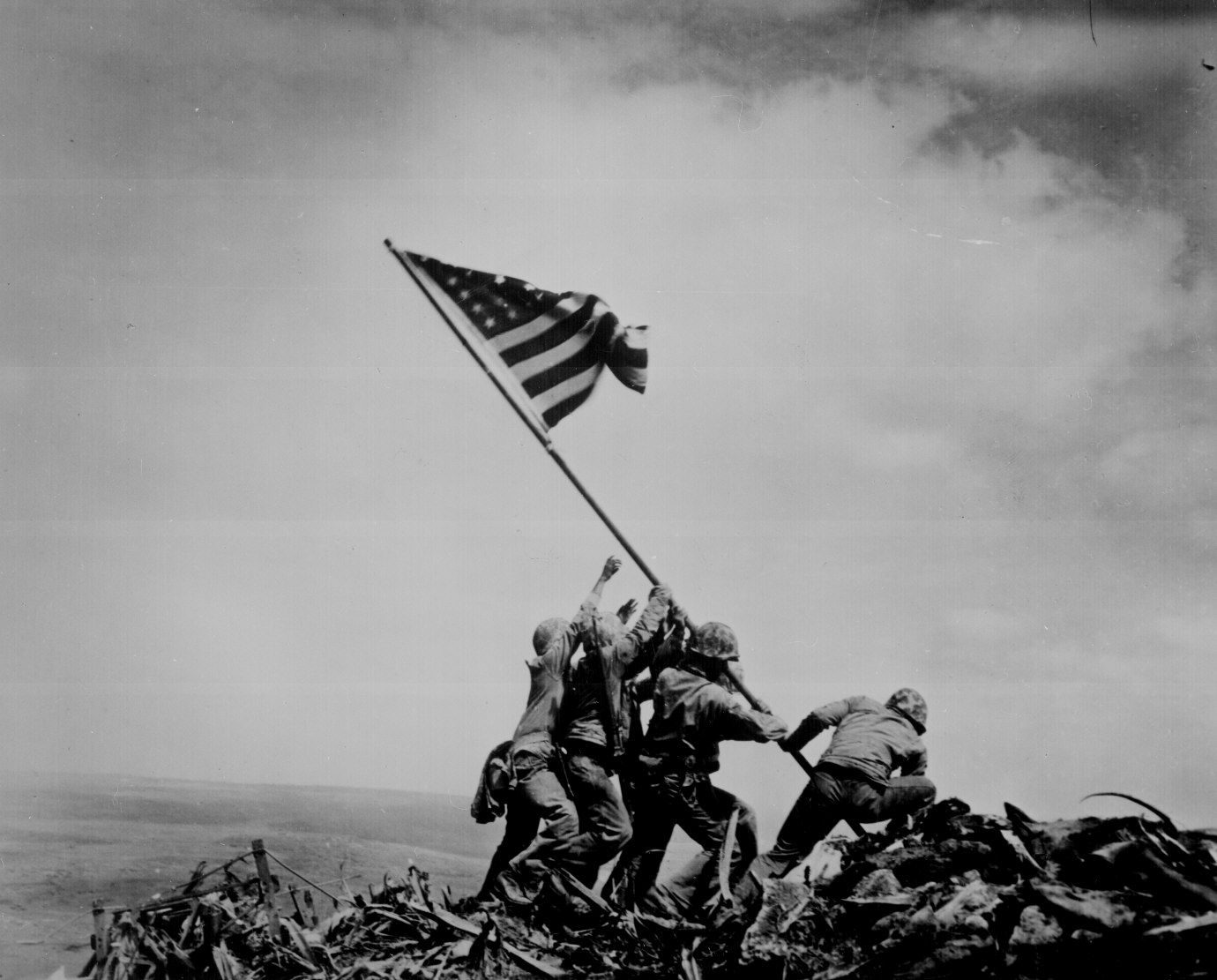
However, as Hoyt later argues, these images can promote global awareness and stimulate humanitarian efforts. It is an interesting question however, to think about photojournalism's role as a medium. Often photos are looked as complimentary to print journalism, however it is the images of the saigon execution or the flag raising at Iowa Jima that become historical markers recirculated throughout our history. It is hard to put your finger on what makes an image iconic but ultimately I believe it is the power to affect an audience and put into words what can't be said.
My personal belief is that the controversial images should be public and shown. When 200,000 plus people have been estimated as being dead and U.N. officials are saying an accurate body count may never been known, the need for symbolism is more apparent than ever. Photojournalism provides not only an immediate space for an urgent relay of unspeakable ideas but further a place for historical icons to form and speak to the past, present and future.
The widespread media coverage of Haiti reflects the levels of importance that the crisis has on local, national, and global levels. Haiti coverage has the nations attention and has effectively been brought into your community, your campus, your living room.
The Washington Post recently produced a photo gallery entitled, "World reacts to Haiti earthquake". This photo essay is a compilation of 82 slides, starting with George Clooney and ending in Taiwan. The images vary in subject and mainly focus on global humanitarianism and personal emotion. The contrast of united community and suffering individuals highlight the scale of the earthquake and how its aftershock is literally all around us.
I focused on this photo slideshow for two reasons. First, I believe it highlights how the press can literally convey the relevance of an event. When viewing the slideshow, you are bound to so many of the images through personal experience. The varied images speak to your personal ideology, morals, experiences, and pulls the global to the personal.
I also chose to highlight this photo slideshow in response to an opinion piece I read in the times about the purpose of crisis photojournalism and its ultimate goal. The article, "Face to Face with Tragedy" was written by Clark Hoyt, the NYTimes public editor.
Hoyt's opinion piece addresses criticism of Haiti's photo coverage. Many people have argued that the photo's being shown in the news media are 'sensationalist' and 'exploitative'. Hoyt cites one reader who wrote on the NYTimes website that, "If this had happened in California, I cannot imagine a similar depiction of half-clothed bodies splayed out for the camera. What are you thinking?”.
Hoyt discusses controversial images of dead babies, strung out corpses, and so forth. The coverage reminds me of a excerpt from Michael Herr's Dispatches in which he writes, " put in quote".
However, as Hoyt later argues, these images can promote global awareness and stimulate humanitarian efforts. It is an interesting question however, to think about photojournalism's role as a medium. Often photos are looked as complimentary to print journalism, however it is the images of the saigon execution or the flag raising at Iowa Jima that become historical markers recirculated throughout our history. It is hard to put your finger on what makes an image iconic but ultimately I believe it is the power to affect an audience and put into words what can't be said.

My personal belief is that the controversial images should be public and shown. When 200,000 plus people have been estimated as being dead and U.N. officials are saying an accurate body count may never been known, the need for symbolism is more apparent than ever. Photojournalism provides not only an immediate space for an urgent relay of unspeakable ideas but further a place for historical icons to form and speak to the past, present and future.
Subscribe to:
Posts (Atom)